TERTIARY EDUCATION. PRACTICAL CAPABILITY.
Connect the diploma pathway with the work behind it.
For polytechnics, technical colleges and institutes of technology: bring academic registration, laboratory and workshop learning, industrial experience and award decisions into a coherent institutional journey.
Plan an institutional walkthrough
Confirm entry, department, level and required course units.
How does polytechnic management differ from general school administration?
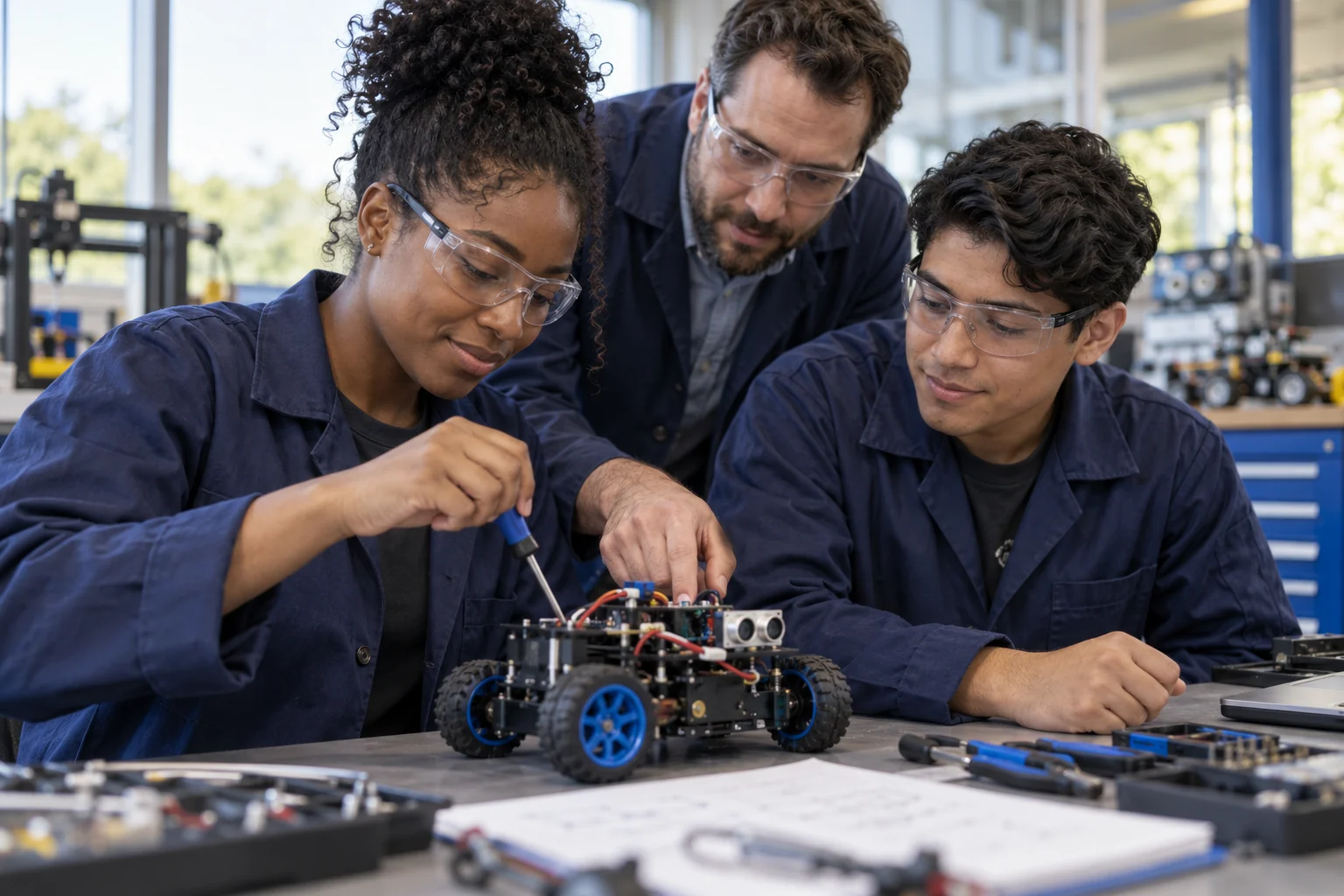
Polytechnics combine tertiary academic rules with supervised practical work, specialist resources and industrial experience. A useful operating model connects course-unit results with practical evidence and placement completion before an authorized progression or award decision.
A technical institution has its own operating rhythm.
Diploma and applied-degree pathways
Map certificates, diplomas, advanced diplomas and applied degrees to departments, levels, semesters and course units. Capture progression and entry requirements using your institution’s terminology.
Theory alongside practical evidence
Distinguish written assessments from workshop observations, laboratory work, projects and competency sign-offs. Agree how evidence, reassessment and moderation contribute to a final result.
Industrial training and attachments
Identify placement coordinators, host organizations, supervisors, logbook requirements and review points. Define what the institution records and what external supervisors submit through an agreed channel.
Keep delivery capacity close to the academic plan.
Workshops, laboratories and equipment
Connect room availability, equipment bookings, consumables and maintenance responsibilities with teaching schedules. Include supervised capacity and relevant safety requirements in the planning brief.
Department and examination responsibilities
Give instructors, heads of department, exam officers and registry a clear handover. Identify who submits marks, moderates practical evidence, resolves missing results and approves an award.
Learner support and progression
Coordinate academic advising, fee arrangements and accessibility adjustments for full-time, part-time and returning learners. Keep confidential cases separate from routine teaching and attendance information.
Start with a department that can prove the whole journey.
Agree the evidence
Choose a cohort and one practical course with a realistic exception, such as an incomplete industrial attachment or reassessment. Agree how the unresolved requirement affects progression.
Reconcile existing records
Map student identities, historical results, course codes and award definitions before importing data. Check sample academic histories as well as record totals.
Prepare people for launch
Train registry, instructors, workshop coordinators and bursary through their own tasks. Use a support plan that makes responsibility clear during registration and result-release peaks.
THE CONNECTED JOURNEY
Follow the institutional handovers.
Register a pathway
Confirm entry, department, level and required course units.
Deliver theory and practice
Coordinate teaching, workshop capacity and assessment evidence.
Review industrial experience
Collect the agreed supervisor evidence and resolve incomplete requirements.
Approve progression or award
Moderate results and record the authorized academic decision.
A SCENARIO TO TEST
Follow a diploma candidate with an incomplete attachment.
A final-year technical diploma learner completes the taught units and workshop assessment, but the employer’s attachment report has not arrived. The coordinator needs to follow up without treating academic marks as evidence that the placement requirement is complete.
- Placement coordinator
- Record the missing report, its expected source and the person responsible for follow-up.
- Assessor and department
- Distinguish a missing document from unsatisfactory practical performance; define the review or reassessment route.
- Examination board
- Determine whether the learner may progress, receive a provisional decision or wait for a completed requirement under the institution’s rules.
- Acceptance evidence
- Trace the final decision to the approved marks, practical sign-offs and attachment evidence.
Short-course competency providers may not use the same semester, credit or examination-board structure. The vocational education page addresses that different delivery model.
 Polytechnics & technical tertiary institutionsRegister a pathway → Review industrial experience
SEE HOW THE WORK CONNECTS
Polytechnics & technical tertiary institutions
For polytechnics, technical colleges and institutes of technology: bring academic registration, laboratory and workshop learning, industrial experience and award decisions into a coherent institutional journey.
- 01
Register a pathway
Confirm entry, department, level and required course units.
- 02
Deliver theory and practice
Coordinate teaching, workshop capacity and assessment evidence.
- 03
Review industrial experience
Collect the agreed supervisor evidence and resolve incomplete requirements.
Illustrative workflow · Shape the details around your institution.
MAKE THE PLAN YOURS
Prepare a demonstration that reflects your institution.
Use this session checklist to identify what is ready and what needs an owner.
0 of 5 ready
Continue with the people and workflows involved.
Universities & tertiary education
Explore shared registry, credit and campus responsibilities.
Vocational education
Explore competency-led and shorter training pathways.
Assessments & tests
Connect evidence, assessment decisions and feedback.
Facilities and bookings
Plan specialist spaces alongside institutional activity.
The practical questions.
Is a polytechnic the same as a short-course training center?
No. A polytechnic may combine a formal tertiary academic structure with extensive practical and industrial requirements. Discovery needs to account for both, including department governance and approved awards.
Can terminology reflect our country and institution?
Bring your qualification names, calendar, grading and regulatory reporting requirements. Configuration and reporting scope should be agreed against those specifics rather than assumed from a generic model.
TAKE THE NEXT STEP
Make the next demonstration about your academic model.
Bring a program structure, a workflow and an exception. Let the walkthrough address the work your teams actually do.