
Health, Safety & Inclusion
Visitor Management & Access Control
Give every visit a clear host and a clear record.
Coordinate expected visits, host confirmation and visitor records alongside the institution’s physical access procedures.

Connect the visitor, purpose, time, and host before arrival.
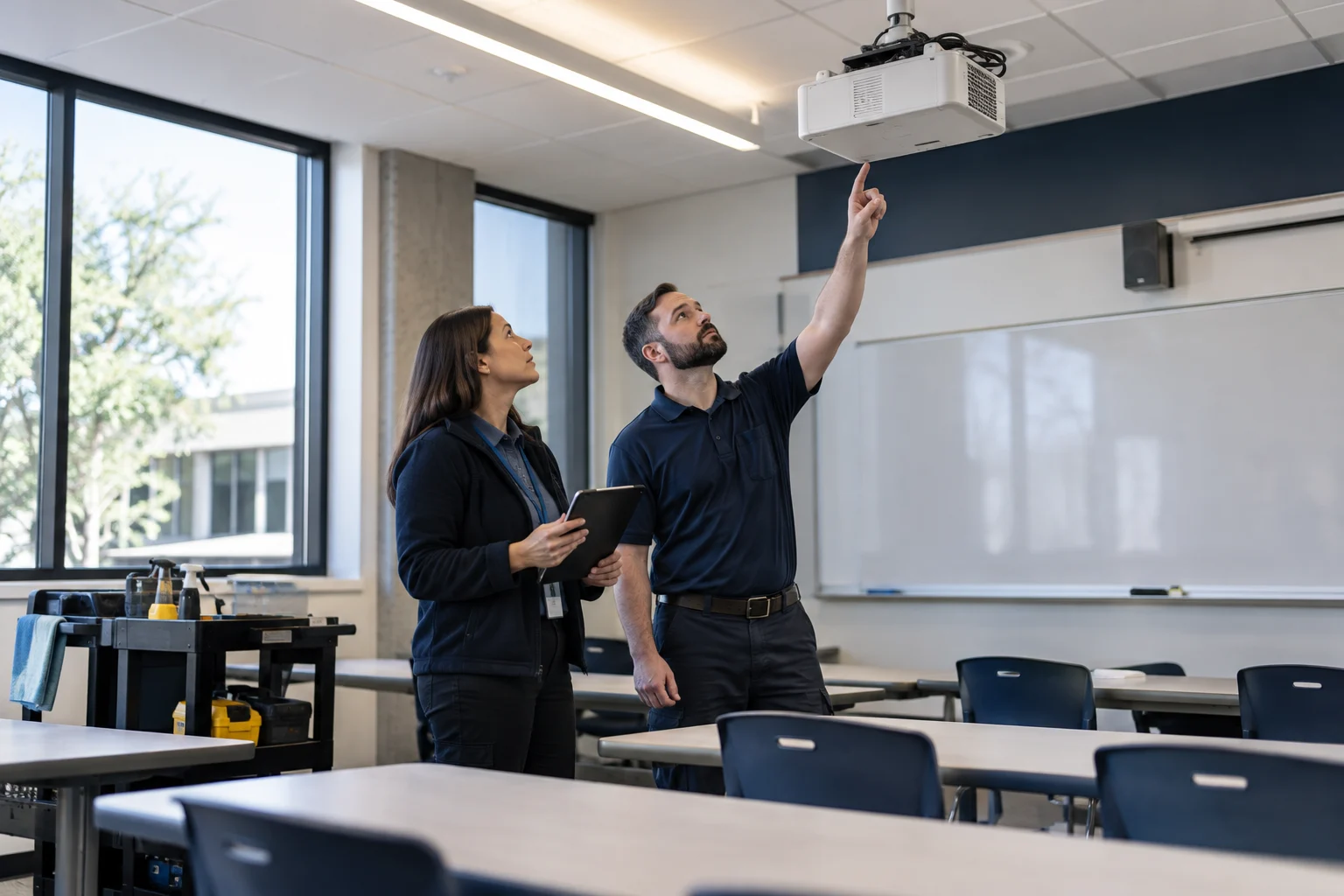
START WITH THE ACTUAL WORK
Why connect visitor management & access control?
Reception needs to know who is expected, who is responsible for the visit, and whether the visitor has departed.
WHAT THIS CAPABILITY BRINGS TOGETHER
Visitor Management & Access Control: records, decisions, and handovers.
Expected visits
Connect the visitor, purpose, time, and host before arrival.
Arrival recording
Support the institution’s identity, acknowledgment, and entry procedure.
Departure and exceptions
Keep open visits and unresolved departures visible to responsible staff.
FOLLOW THE WORK FROM START TO FINISH
Explore the visitor management & access control workflow.
This interactive illustration explains the operating model. It contains no live institutional records.
Expected visits
Connect the visitor, purpose, time, and host before arrival.
Visitor categories and host approvalArrival recording
Support the institution’s identity, acknowledgment, and entry procedure.
Arrival checks and visit instructionsDeparture and exceptions
Keep open visits and unresolved departures visible to responsible staff.
Departure review and record retentionRegister an expected visitor
Register the expected visitor and purpose.
A WORKED EXAMPLE · ILLUSTRATIVE SCENARIO
An expected visitor still needs an arrival check
A contractor has an appointment but arrives with a different colleague. An existing booking does not automatically establish authorization for the additional person.
The decision and its context
Follow the institution’s identity, host confirmation and access procedure. Record the visit purpose, permitted area and departure, with the appropriate response if the host or authorization cannot be confirmed.
What a complete outcome looks like
Reception should know who is currently on site and who is responsible for them. Retention and access to visit records follow institutional policy.
A CAPABILITY, NOT AN ISLAND
Connect visitor management & access control with the next workflow.
The same institutional context should support the next responsible team’s action. Explore the connected capabilities.
Coordinate appointment availability, participant details and follow-up for institutional conversations.
Safeguarding & Child ProtectionStructure concern reporting, designated review and restricted case handling around institutional safeguarding procedures.
Integrations & APIsPlan how Qentak exchanges information with agreed systems, including ownership, mapping and error handling.
YOUR INSTITUTION’S RULES
Set the rules for visitor management & access control.
- Visitor categories and host approval
- Arrival checks and visit instructions
- Departure review and record retention
WHEN THE DAY DOESN’T FOLLOW THE DEFAULT
An unexpected visitor arrives
Follow the institution’s reception and identity checks before recording authorized entry.
 Visitor Management & Access ControlExpected visits → Departure and exceptions
SEE HOW THE WORK CONNECTS
Visitor Management & Access Control
Reception · Security teams. Connect the visitor, purpose, time, and host before arrival.
- 01
Expected visits
Connect the visitor, purpose, time, and host before arrival.
- 02
Arrival recording
Support the institution’s identity, acknowledgment, and entry procedure.
- 03
Departure and exceptions
Keep open visits and unresolved departures visible to responsible staff.
Illustrative workflow · Shape the details around your institution.
AUTOMATION WITH A PURPOSE
When an expected visit reaches its time.
Use an agreed trigger and response while keeping the responsible person in the decision.
An expected visit reaches its time
Prepare reception and host context without exposing unrelated institutional information.
APPROPRIATE CONTROL
Who can act on visitor management & access control?
Visitor logs contain personal information. Physical door or badge integrations require separately agreed hardware and operating procedures.
Explore security and institutional controlKNOW WHETHER THE CHANGE IS HELPING
A complete visit record
Review visits without a confirmed host or recorded departure and the causes of reception exceptions.
Agree the baseline, reporting period, and owner before comparing results.Connect evidence to decisionsSEE IT IN YOUR CONTEXT
Different institutions. Specific responsibilities.
Institution perspectives
Special educationBoarding schoolsPeople doing the work
ReceptionA practical introduction
Bring a representative workflow, one recurring exception, and the people who own the handoffs.
Plan your implementationBEFORE THE CONVERSATION
Useful questions about visitor management & access control.
Does this automatically control doors?
No. Physical access control requires a scoped integration with the institution’s hardware and security procedures.
How should sensitive workflows be introduced?
Agree the professional responsibilities, access boundaries, consent context, escalation routes, and retention rules. Test permissions and exceptional cases with the designated institutional leads.
PUT YOUR PROCESS IN THE PICTURE
Explore visitor management & access control in your institution.
Start with your current workflow, the decisions that take time, and the handoffs you want to improve.
This public page presents Qentak’s capability model and an illustrative workflow. Available modules, integrations, operating rules, and rollout scope are established in your implementation plan.
Explore all 69 capabilities