QENTAK FOR COMMUNITY COLLEGES
Connect flexible entry with a meaningful next step.
Bring credit-bearing programs, workforce training, transfer pathways, advising, and student services into a college experience built around different learner goals.

Capture the learner’s intended qualification, transfer, or employment pathway.

START WITH THE REAL WORK
The daily pressures facing community colleges.
Several routes through college
Distinguish certificates, associate programs, non-credit courses, and transfer preparation without duplicating the learner’s identity.
Credits with context
Coordinate prior learning, course completion, transfer review, and program requirements.
Progress around real life
Connect part-time schedules, advising, finance, and support for learners balancing study with other commitments.
WHAT TO LOOK FOR IN YOUR SETTING
Make flexible pathways navigable for the learner.
Community colleges may combine transfer programs, career qualifications and continuing education. Learners need an understandable route through prerequisites, recognized prior learning and the remaining requirements for their intended outcome.
A representative operating decision
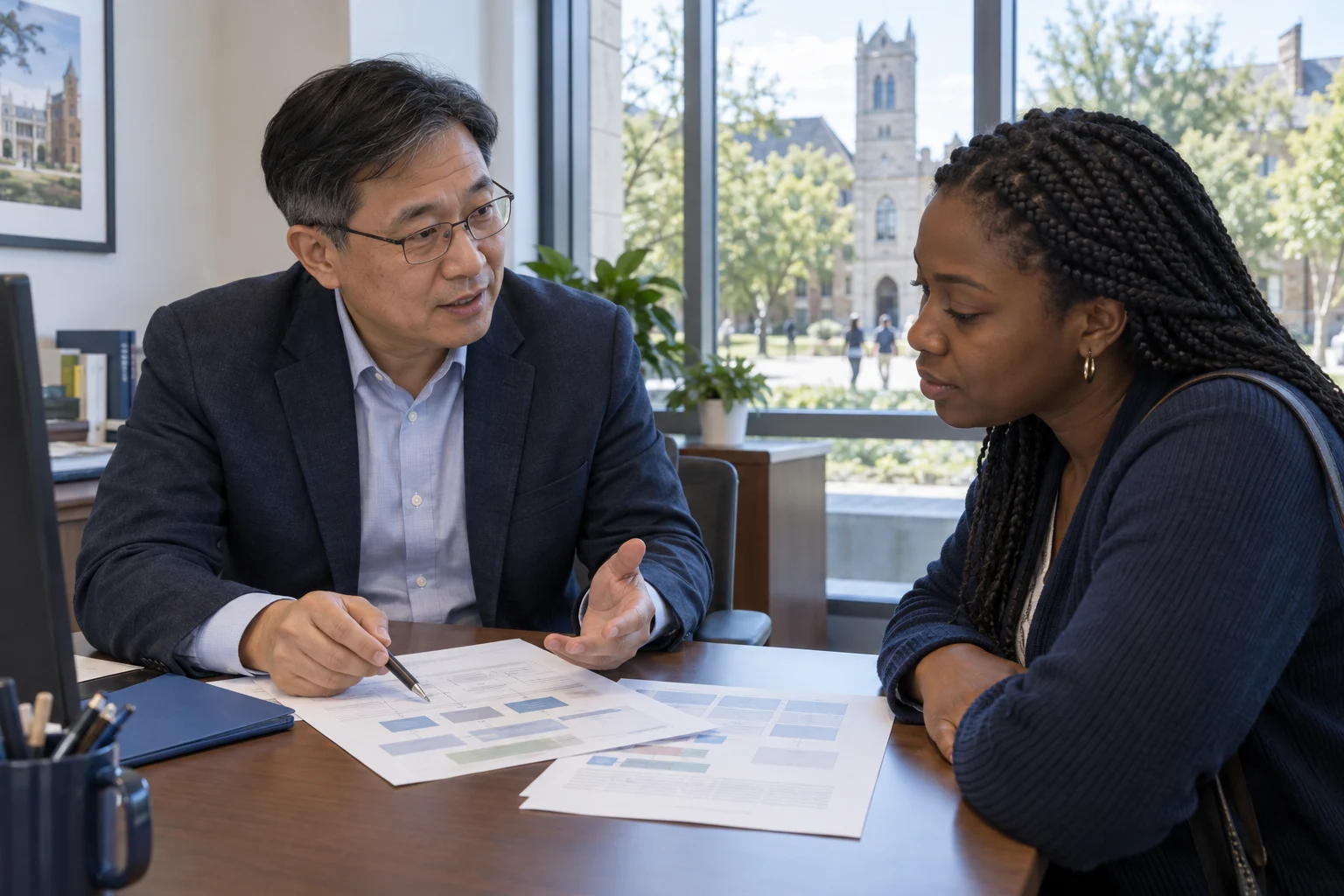
Walk through a part-time learner who changes pathway after receiving transfer credit. Preserve the original evidence and approval, then explain which requirements are satisfied and which still need a course or assessment.
BUILT AROUND YOUR STRUCTURE
Academic structure for community colleges.
Map departments, programs, credits, course sections, short courses, prerequisites, and articulation arrangements. Non-credit learning needs its own completion rules alongside credit-bearing academic records.
Explore the capability directoryA DAY IN YOUR SETTING
A flexible pathway through college
An illustrative workspace. Choose an item to explore its next conversation.
ILLUSTRATIVE TASK · COMMUNITY COLLEGES
Course registration
Review a prerequisite and section-capacity question.
Discuss the handover: who confirms this step, what information is needed, and which team acts next?
Capabilities that belong in this conversation.
Course & Subject Management
Organize subjects and courses with their teaching teams, prerequisites, capacity and program relationships.
Enrollment & Registration
Connect accepted offers with course or class registration, guardian details and the requirements for starting a new term.
Transcripts & Academic Records
Bring course history, credits and approved outcomes together for academic records and transcript requests.
Student Progression & Promotion
Connect progression decisions to academic requirements, teacher review and the next stage of a student’s program.
Scholarships & Discounts
Link approved awards and fee reductions to eligibility rules, student records and billing calculations.
Certificates & Credentials
Coordinate eligibility, approval and issuance for institutional certificates and completion credentials.
THE LEARNER JOURNEY
Community Colleges: the learner journey.
An illustrative workflow to shape your institution’s demonstration.
- 1
Identify the goal
Capture the learner’s intended qualification, transfer, or employment pathway.
- 2
Plan the schedule
Review prerequisites, placement, and the courses available this session.
- 3
Review progress
Connect advising, completed credits, and any outstanding requirements.
- 4
Transfer or complete
Prepare reviewed academic records and the next institutional handover.
 Qentak for Community CollegesIdentify the goal → Review progress
SEE HOW THE WORK CONNECTS
Qentak for Community Colleges
Bring credit-bearing programs, workforce training, transfer pathways, advising, and student services into a college experience built around different learner goals.
- 01
Identify the goal
Capture the learner’s intended qualification, transfer, or employment pathway.
- 02
Plan the schedule
Review prerequisites, placement, and the courses available this session.
- 03
Review progress
Connect advising, completed credits, and any outstanding requirements.
Illustrative workflow · Shape the details around your institution.
ONE INSTITUTION. DIFFERENT PERSPECTIVES.
What each team needs in community colleges.
Registrar
Course registration, credit decisions, and transcript accuracy.
Academic adviser
Pathway requirements and an actionable plan with the learner.
Workforce coordinator
Short-course cohorts, employer needs, and completion evidence.
BEYOND THE CLASSROOM
Coordinate the operations behind learning.
Coordinate per-credit or course billing, financial assistance, laboratory capacity, library services, and evening provision. Keep sponsored cohorts and individual learners distinguishable in financial workflows.
CONFIGURATION & GOVERNANCE
Agree the details before rollout.
Agree credit definitions, transfer-review authority, repeat rules, non-credit certificates, course sections, and the handling of learners active in more than one pathway.
Retain the evidence behind credit recognition and authorized changes to the academic record. Define how advising information differs from restricted support notes.
Discuss security and controlFollow the work from another perspective.
A supported change, step by step.
Test a credit program and a non-credit course together. Reconcile learner identity, recognition decisions, transcript output, and course billing without merging the different completion rules.
Planning questions for community colleges.
Can credit and non-credit learning coexist?
Map their registration, assessment, and completion rules separately while deciding which identity and service records they share.
Are transfer credits accepted automatically?
Acceptance is an institutional academic decision. The workflow should retain the source evidence, reviewer, equivalence decision, and approved credit.
YOUR CONTEXT COMES FIRST
See the journey for community colleges.
Bring your people, processes, and priorities into the conversation.